Choosing between carbon steel, stainless steel, and specialty alloys is not a general decision – it is a project-specific one. The wrong steel grade can compromise structural integrity, inflate fabrication costs, or cause premature failure in demanding environments like cement processing or oil and gas refining. For this reason, identifying the correct types of steel…
Advanced Plate Roll Technology
In manufacturing, aerospace, construction, and other sectors, many pieces of equipment require parts made with metal plate rolling. This process involves forming curved and cylindrical shapes with metal plates using certain rolling techniques. Learn more about how metal plate rolling works, some of the specific methods that fabricators use, their various industry applications, and the…
Hot Rolling vs. Cold Rolling
Choosing between hot rolling and cold rolling for a steel fabrication project goes beyond a mere technical detail. The decision impacts cost, strength, finish, and how well the material performs in your final application. Determining which process works best comes down to how the material will be used. Factors like load requirements, environmental exposure, and…
The Science of Metal Forming
Cutting metal is often an efficient way to produce metal goods, but it disrupts the integrity of the metal. The sharp cuts carve straight through the internal grain structure, which is part of what gives steel and other alloys their long-lasting strength. Metal forming processes preserve that grain structure by bending and shaping the metal…
Custom Steel Cone Fabrication
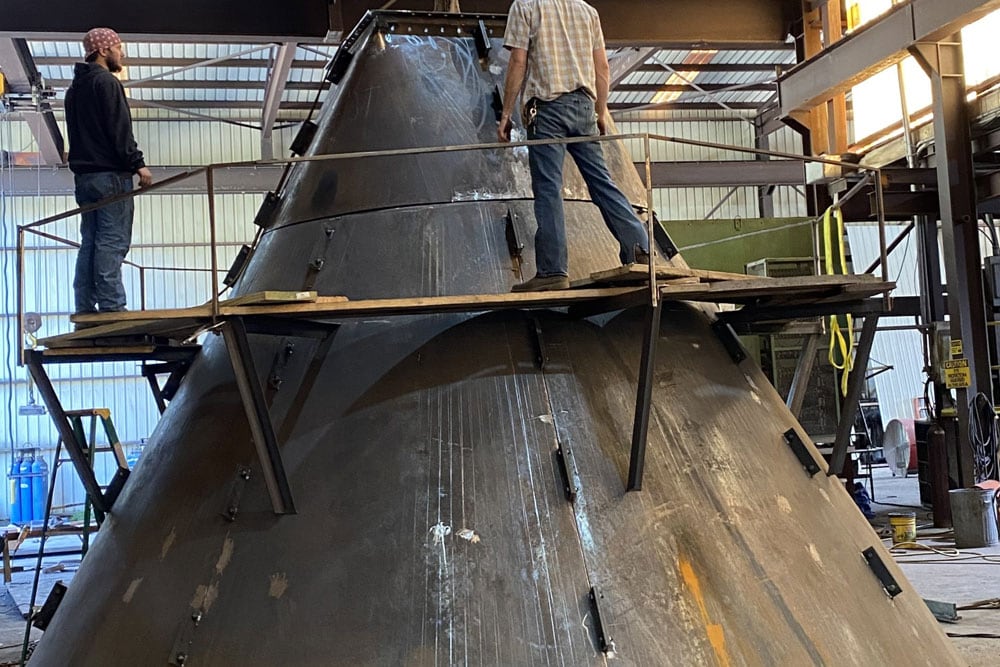
Industrial steel fabrication includes different forms of metal fabrication and custom manufacturing. It includes forming a steel cone using carbon steel, stainless steel, aluminum, or other thick enough alloys to form them into a cone effectively. The process of creating a steel cone is called metal forming, which Fabrication Services Inc. offers. There are two…